Midjourney vs Stable Diffusion: Which AI Generator to Use?
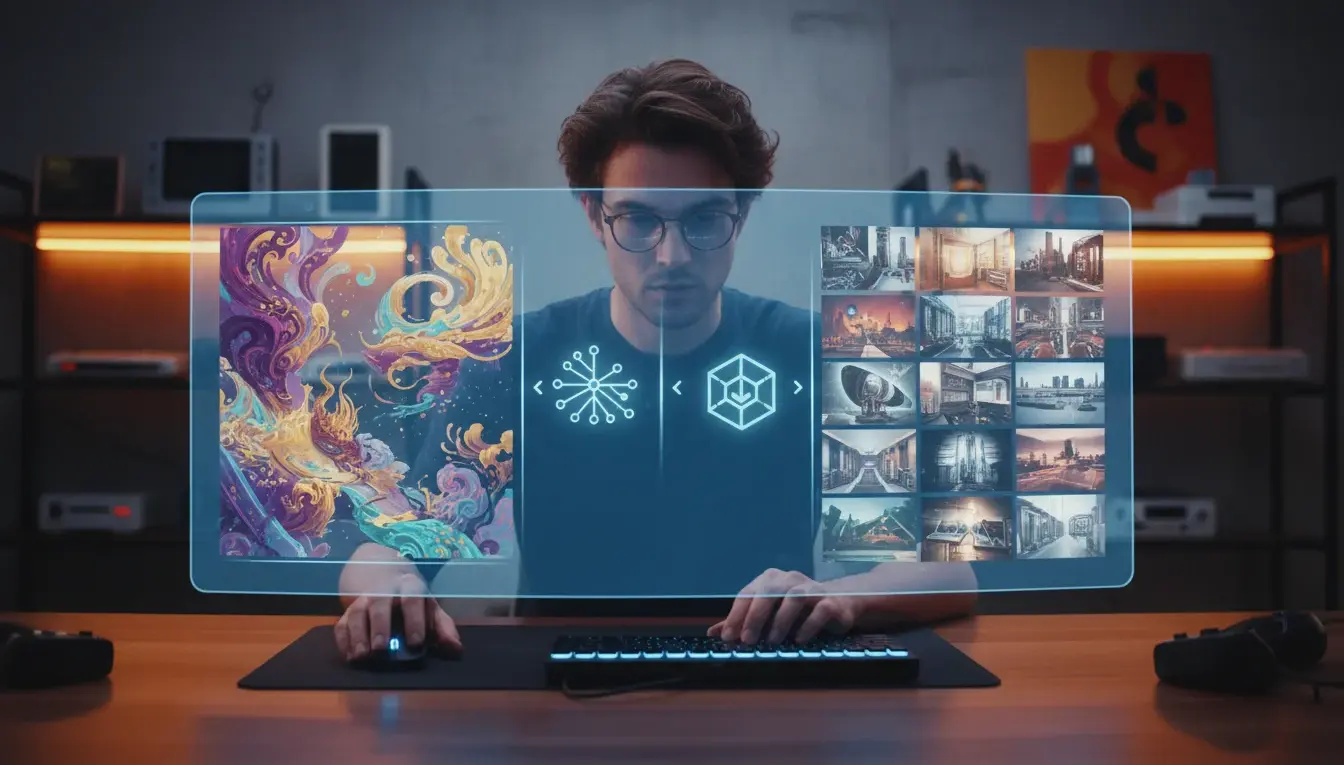
For most users, Midjourney is the better choice for its high-quality, artistic images and user-friendly web interface. Stable Diffusion offers unparalleled customization and is free to run on your own hardware, but it requires technical skill and navigating a complex, fragmented ecosystem. Your choice depends on prioritizing ease-of-use or ultimate control.
Imagine this scenario: you’re launching a new marketing campaign and need a dozen stunning, thematic images by the end of the week. You’ve heard about AI image generators, but diving in feels like choosing between two completely different worlds. One offers a polished, guided experience, while the other gives you the raw engine and a box of tools. This is the core difference between Midjourney and Stable Diffusion, and picking the right one can mean the difference between creative flow and technical frustration. Not sure which tool fits your workflow? Our AI Tool Finder can help you decide.
How Do These AI Image Generators Fundamentally Work?
Both Midjourney and Stable Diffusion create images using a process called diffusion. This technique starts with a pattern of random noise and gradually refines it, step by step, until it matches the text prompt you provided. Think of it like a sculptor starting with a block of marble and chipping away until a figure emerges. The initial noise pattern is different every time, which is why the same prompt can produce unique results with each generation.
While the underlying technology is similar, their approach and training data create distinct outcomes. Midjourney is developed by a private research lab and its model is proprietary. This results in a more curated and stylistically opinionated output; its images often have a recognizable artistic flair. In contrast, Stable Diffusion is open source. This means its core model can be downloaded, modified, and trained by anyone, leading to a vast universe of specialized models for everything from photorealistic portraits to anime characters.
Midjourney: The Polished, All-in-One Studio
Midjourney has evolved from a quirky tool accessible only through a Discord chat app into a sophisticated, web-based platform. Its primary strength lies in its simplicity and the consistently high quality of its output. You don’t need to understand complex parameters to get a beautiful image. The platform is designed for artists and creators who want to translate ideas into visuals quickly.
The workflow is straightforward. You type a prompt, and Midjourney generates four initial options. From there, you can upscale your favorite, create variations, or use powerful editing features like Vary (Region), Pan, and Zoom Out. Features like Style Reference (–sref) and Character Reference (–cref) are particularly useful for maintaining a consistent look and feel across multiple images, a critical need for any project. While it operates on a subscription model with no free tier, the entry-level plan provides enough credits for hundreds of images, making it accessible for serious users. It’s important to remember that tools like Midjourney are purely for image generation, which sets them apart from multimodal AIs. You can read more about the key differences between Midjourney vs. ChatGPT to understand this better.
Stable Diffusion: The Power User’s Toolkit
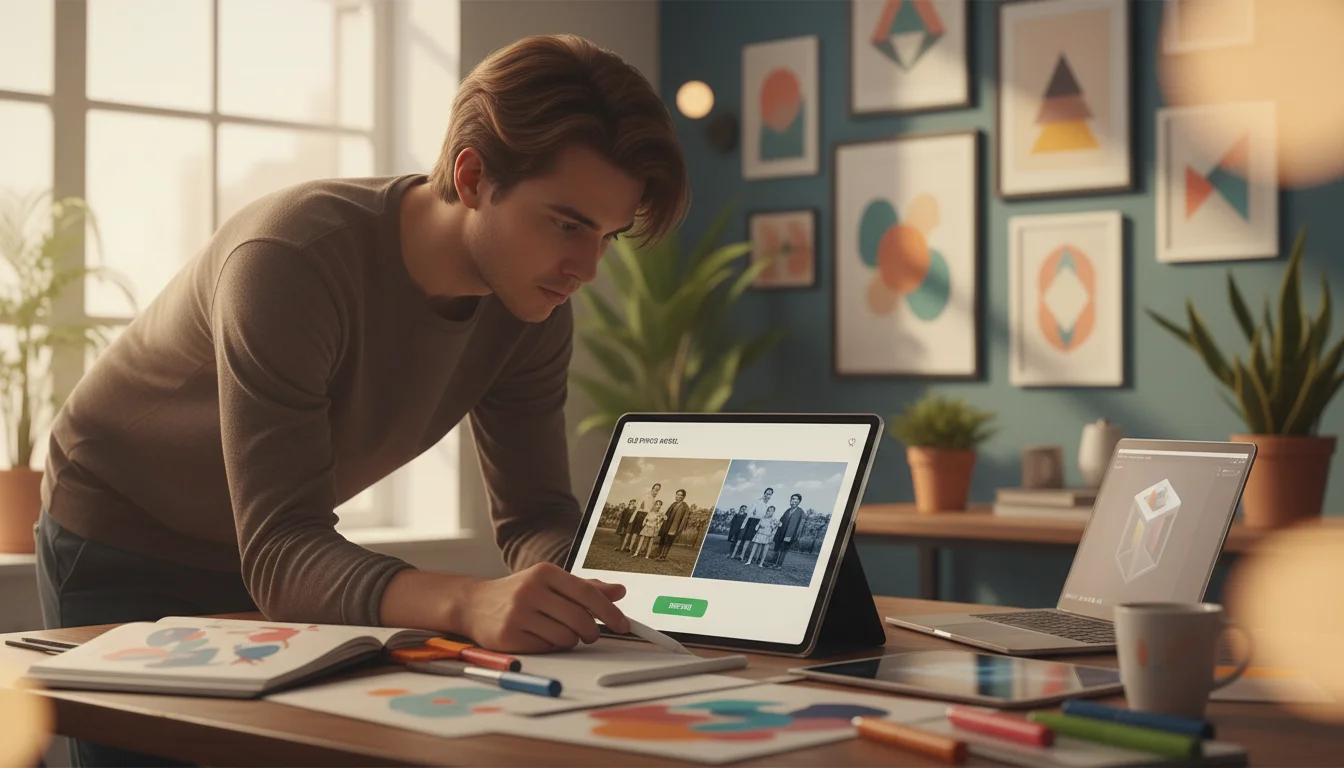
Stable Diffusion represents the open-source philosophy in the AI world. Its greatest advantage is its flexibility. You can run it on your own computer for free (assuming you have a powerful enough GPU), giving you complete privacy and no per-image costs. You can also use it through dozens of third-party websites and applications, each offering a different user interface and feature set.
This freedom also brings complexity. A common mistake I find is users getting overwhelmed by the sheer number of options. You must choose between interfaces like Automatic1111 or ComfyUI and decide which community-trained model best suits your art style. This fragmentation can be daunting for newcomers. For those willing to learn, the control is unmatched. You can train the model on your own images to replicate a specific style or character, use extensions like ControlNet for precise pose and composition control, and fine-tune every aspect of the generation process. What the manual doesn’t say—but experience shows—is that mastering Stable Diffusion is less about prompting and more about building a custom workflow.
Which Tool Produces Better Images?
The definition of a “better” image depends entirely on your goal. Midjourney excels at producing aesthetically pleasing, artistic, and coherent images straight out of the box. Its model has a strong internal bias towards what it considers beautiful, which often results in dramatic lighting, detailed textures, and a polished final look. It’s fantastic for concept art, illustrations, and fantasy scenes.
Stable Diffusion’s quality is variable and depends heavily on the specific model and settings used. A base model might produce generic or flawed results, but a specialized model fine-tuned for photorealism can generate images indistinguishable from actual photographs. It gives you the power to chase absolute realism or a niche anime style, but you have to do the work of finding and implementing the right model. In practice, what I see most often is Midjourney winning on artistic consistency, while Stable Diffusion wins on stylistic versatility if you’re willing to put in the effort.
| Feature | Midjourney | Stable Diffusion |
|---|---|---|
| Ease of Use | Very High (Simple web app) | Low to Medium (Requires setup/technical knowledge) |
| Image Quality | Excellent, highly artistic, and consistent | Variable; can be exceptional with the right model |
| Customization | Limited to platform features | Nearly infinite (open source, model training) |
| Cost | Subscription-based (starts at $10/month) | Free (on local hardware) or pay-per-use on platforms |
| Best For | Artists, designers, and users wanting quick, high-quality results | Tinkerers, developers, and users needing maximum control |
A Real-World Choice: The Indie Game Developer’s Dilemma
Consider a real-world scenario: an indie game developer, Sarah, needed concept art for her fantasy RPG. Her goal was to create a consistent look for her main character across various scenes. She started with Stable Diffusion, drawn by the promise of zero cost and total control. After spending a full week learning to install the software, download different models, and experiment with training a LoRA (a small, custom model) on her character sketches, she was still getting inconsistent results. The character’s face would change subtly in each image, and the armor details were never quite right. The result was surprising; the tool with the most control was costing her the most time.
Frustrated, she decided to try Midjourney’s $10 basic plan. Using its new Character Reference feature, she uploaded a single clean drawing of her character. Within two hours of prompting, she had generated over 20 high-quality, consistent images of the character in different poses and environments. For her, the monthly subscription was a small price to pay for reclaiming a week of development time. She traded the theoretical freedom of Stable Diffusion for the practical efficiency of Midjourney.
Navigating Commercial Use and Copyright
Both platforms allow you to use the images you generate for commercial purposes, but the legal landscape is still evolving. A key point to understand is that, according to the U.S. Copyright Office, AI-generated images cannot be copyrighted. This means that while you can use your creations to market a product or as part of a design, you have no legal protection if someone else decides to use the same image.
Images created by Midjourney and other generative AIs can’t be copyrighted. This means that even though you’re free to use images you generate commercially, you have limited recourse if someone takes them and uses them without your permission.
— U.S. Copyright Office Ruling, 2023
This creates a significant risk for anyone trying to build a brand with AI-generated assets like logos or key visuals. While Stable Diffusion’s open-source nature once made it seem like a safer bet, recent licensing changes and corporate turmoil have complicated things. For any serious commercial project, it’s wise to treat AI images as a starting point or a component of a larger work, rather than the final, protectable asset itself.
The choice between Midjourney and Stable Diffusion boils down to a simple trade-off: convenience versus control. If your priority is generating beautiful, artistic images with minimal fuss, Midjourney is the clear winner and well worth the subscription fee. If you are a hobbyist who enjoys tinkering, a developer who needs deep integration, or someone who wants to run a model locally for free, the effort required to master Stable Diffusion will pay off. Your best next step is to try a free web-based version of Stable Diffusion to see if you enjoy the process. If you find it clunky or slow, sign up for Midjourney’s basic plan and compare the results for yourself. You can also explore our list of the best AI tools of 2026 for a broader view of the landscape.
FAQ
Can I use images from Midjourney and Stable Diffusion for my business?
Yes, both platforms’ paid tiers allow for commercial use, but AI-generated images cannot be copyrighted, meaning you cannot prevent others from using them.
Do I need a powerful computer to use Stable Diffusion?
To run Stable Diffusion locally on your own machine, you need a modern computer with a powerful graphics card (GPU) with at least 8GB of VRAM. Alternatively, you can use cloud-based services or third-party websites that run it for you, which requires no special hardware.
Is Midjourney better for beginners than Stable Diffusion?
Yes, Midjourney is significantly more beginner-friendly. Its web-based interface is intuitive and produces high-quality results with simple text prompts, whereas Stable Diffusion often requires technical setup and a deeper understanding of its various models and settings.
Are there any good free alternatives to Midjourney?
Yes, many platforms offer free access to Stable Diffusion models, often with some limitations on usage or features. Services like NightCafe or Clipdrop are great places to experiment with Stable Diffusion and other open models without paying for a subscription.