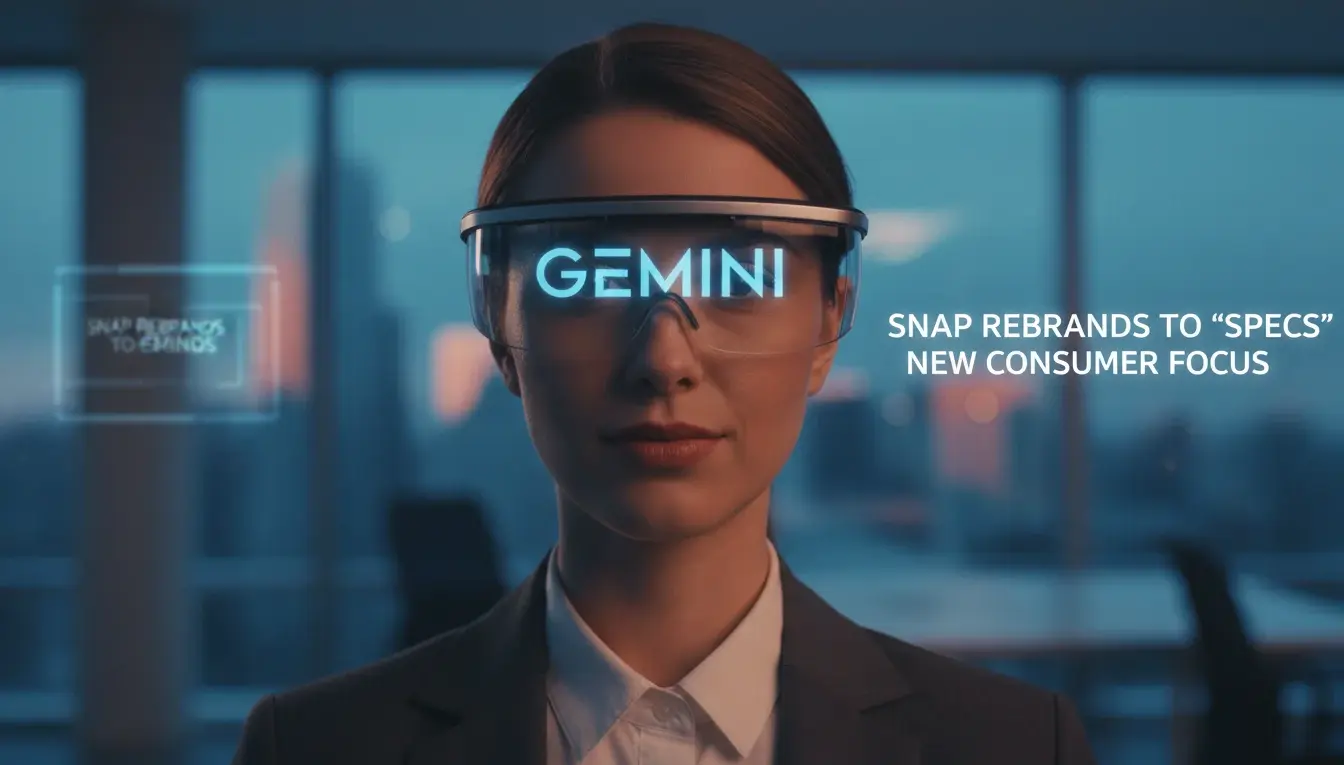
Snap’s New Specs: 4 Key Features of its 2026 AR Glasses
Snap is making a big move. They’re rebranding their augmented reality hardware from Spectacles to ‘Specs’ for a new consumer-focused launch in 2026. What does this mean for you? These next-gen AR glasses are designed to be much lighter and more powerful, plus they’ll run on Snap OS with AI models from both OpenAI and Google Gemini. This puts them in direct competition with upcoming hardware from Meta and Samsung.
Honestly, this move signals a huge shift from a niche developer kit to a mainstream wearable device meant for everyday use. The success of Specs won’t just hinge on its lighter form factor, but also on the practical, real-world applications its new AI features can deliver. Think about it: the race for the first truly successful pair of consumer AR glasses is heating up, and Snap is making a decisive move to get ahead.
What Are the New Snap ‘Specs’?
So, what exactly are these new ‘Specs’? They’re Snap’s next-generation augmented reality smart glasses, built to be smaller, lighter, and way more capable than any previous version of Spectacles. While the developer-focused fifth-gen Spectacles were pretty bulky, the upcoming consumer model aims for a design that you could actually wear all day. They’ll still run on the familiar Snap OS, so the core user interface and gesture controls won’t be a surprise to existing developers.
The first step in this evolution is a physical one. By cutting down the weight and size, Snap is tackling one of the biggest hurdles for AR glasses: wearability. The goal is to create something that feels less like a gadget and more like a normal pair of eyeglasses. But the most significant changes are happening on the inside, with a huge platform-wide upgrade centered on artificial intelligence.
How Will AI Be Integrated into the Platform?
Snap is baking large language models from OpenAI and Google Gemini right into the Snap OS. This allows Specs to handle complex AI tasks out in the real world. And this isn’t just some background feature; it’s the central pillar of the new hardware’s functionality. For instance, imagine you’re traveling and look at a menu in a foreign language—you could see an instant translation overlaid on the text. Or you could point the glasses at a product in a shop to get a real-time currency conversion. Pretty useful, right?
This AI-first approach also extends to content creation for developers. A new Snap3D API will let creators use generative AI to build 3D objects for AR Lenses, which simplifies what used to be a really complex process. On top of that, the platform includes a Depth Module AI that can analyze 2D information to create 3D environmental maps. This helps virtual objects look like they’re actually anchored in your physical space, making the whole AR experience more believable and interactive. The use of advanced systems, similar to what we’ve seen with OpenAI’s latest models, will be key to making these features work well.
With advances in AI, computers are thinking and acting like humans more than ever before. — Evan Spiegel, CEO of Snap
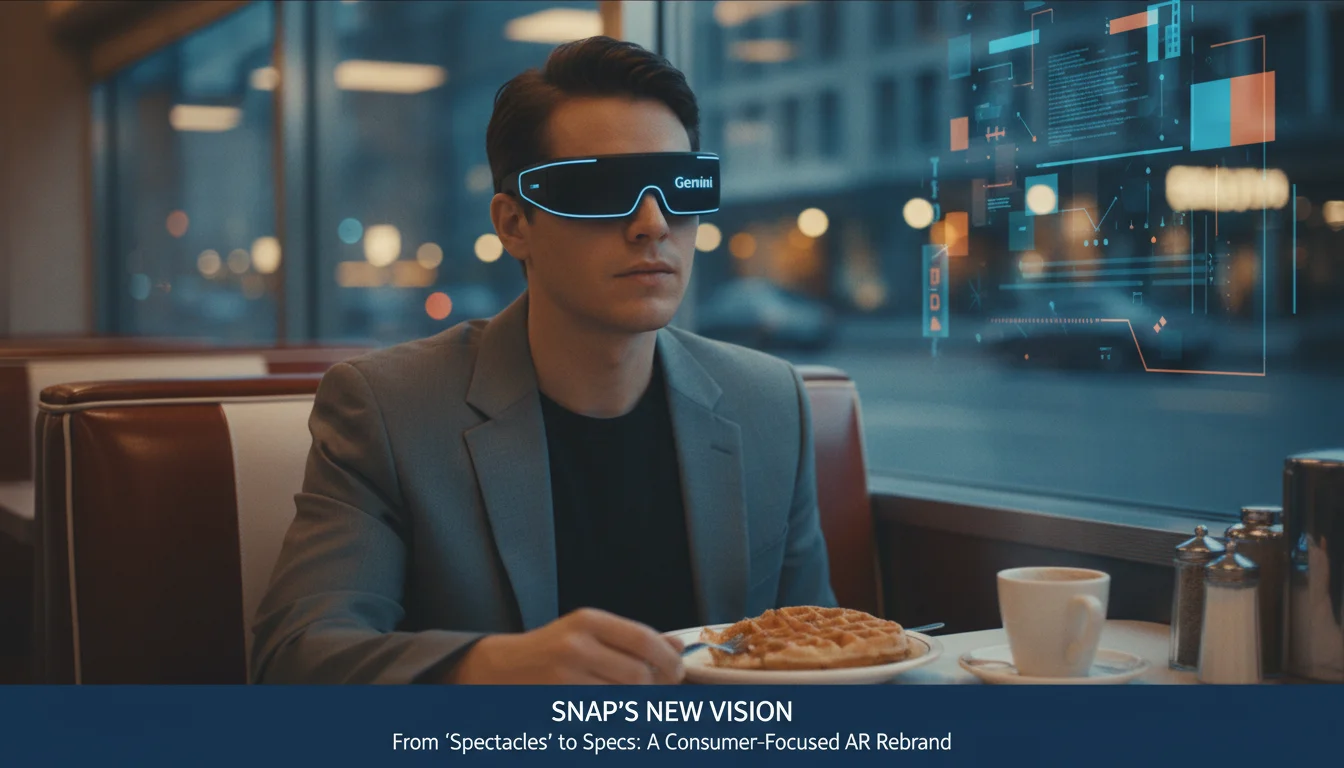
What New Tools Are Available for Developers and Businesses?
The updated Snap OS brings in several new resources designed for commercial and large-scale AR projects. For example, the new Fleet Management application allows an organization to manage and remotely monitor multiple pairs of Specs at once. This is super useful for business applications, like providing guided navigation in a museum or interactive instructions for technicians out in the field.
Furthermore, Snap is adding WebXR support to the OS. Why does this matter? This update will let developers build AR and VR experiences using standard web browsers, which really lowers the barrier to entry for creating content. Instead of needing specialized software, developers can use their existing web development skills to produce immersive lenses and applications. This single move could massively expand the library of available AR experiences by the time Specs launch for consumers.
How Do Specs Compare to the Competition?
Snap’s 2026 launch timeline puts Specs in a head-to-head battle with two other major players: Meta and a Samsung/Google partnership. Meta’s Project Orion glasses are expected in 2027, while the Android XR-based glasses from Samsung and Google are also slated for sometime in 2026. It looks like each company is focusing on a different strength.
The main fight will be over design, features, and price. While early prototypes of Meta’s Orion have earned praise for features like gaze-tracking, Snap is betting on a lighter design and deep AI integration as its main selling points. The real wildcard, though, is the Samsung/Google device, which will benefit from the huge Android ecosystem. In my opinion, success will come down to which company delivers a compelling user experience without a scary price tag, since many of the best AI tools are now being integrated directly into hardware.
| Product | Company | Expected Launch | Key Feature Focus |
|---|---|---|---|
| Specs | Snap | 2026 | Lightweight design, deep AI integration (OpenAI/Gemini) |
| Orion Glasses | Meta | 2027 | Advanced AR display, gaze-tracking capabilities |
| Android XR Glasses | Samsung / Google | 2026 | Integration with the Android ecosystem |
Snap’s shift from Spectacles to Specs marks a serious play for the consumer AR market. By prioritizing a lightweight design and embedding powerful AI models at the core of its operating system, the company is building a strong foundation for a genuinely useful and accessible wearable. So, what’s your next step? Keep an eye on the developer-focused updates and announcements throughout 2025. They’ll give us the first real glimpse into the final capabilities and potential price before the big 2026 launch.
FAQ
When will the new Snap Specs be released to the public?
Snap is targeting a 2026 launch for the new consumer-focused Specs, but they haven’t given a more specific date just yet.
What AI models will the new Snap Specs use?
The new Specs will use an updated Snap OS that integrates LLMs from both OpenAI and Google Gemini. This is what will power cool features like real-time language translation and generative 3D object creation.
Will Snap Specs be cheaper than the old developer kits?
We don’t have official pricing yet, but the move to a consumer market strongly suggests Snap will aim for a much more accessible price than its expensive, developer-only Spectacles.
How will Specs be different from Meta’s AR glasses?
Snap’s Specs are all about a lightweight design and deep AI integration. Meta’s Project Orion glasses, on the other hand, seem to be focusing more on advanced display tech and gaze-tracking as their main selling points.